
What should you consider when buying a vertical machining center for your factory?.
Selecting a vertical machining center requires verifying a positioning accuracy of $\pm$0.003mm and a repeatability of $\pm$0.002mm to meet 2026 aerospace standards. Spindle speeds must reach 15,000 RPM with thermal compensation sensors reducing Z-axis drift by 60% during extended runs. High-torque brushless motors and a 70-bar through-spindle coolant system are necessary for processing titanium alloys, while a 1.5-second tool-to-tool exchange speed improves throughput by 22% in high-volume production.
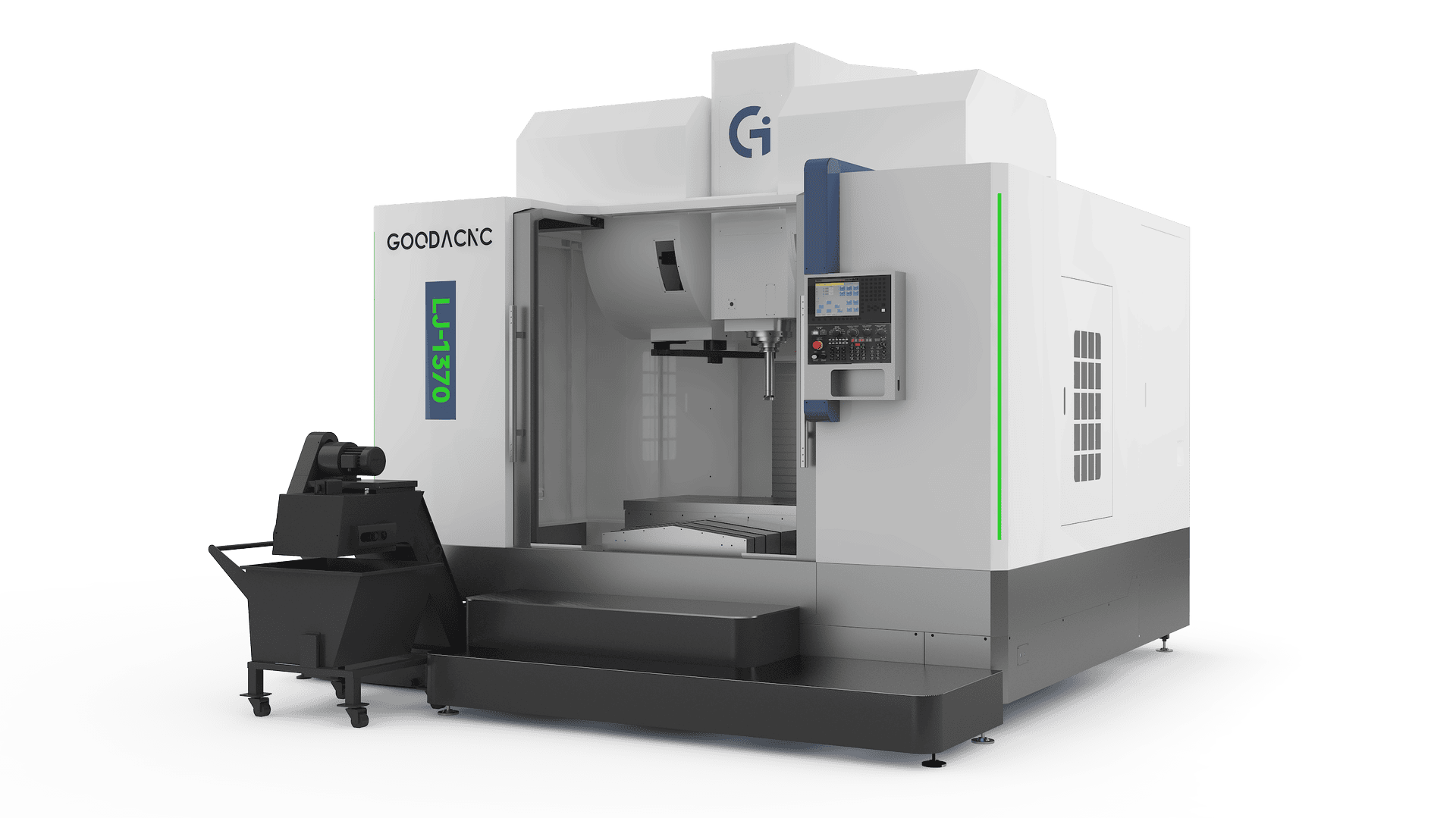
Machine weight and structural damping determine the vibration levels allowed during heavy-duty milling of hardened tool steels. A 7,500kg cast iron frame absorbs harmonic frequencies 3.5 times better than welded steel, preventing the chatter marks that often lead to a 15% scrap rate in precision workshops.
"A 2024 industrial benchmark shows that machines with a wide-stance column design maintain 25% better geometric alignment under a 500kg table load compared to narrow-base models."
Geometric alignment prevents the "table-tilt" effect that compromises the flatness of large aluminum plates used in semiconductor manufacturing. Maintaining a flat work surface within 0.005mm over a 1,000mm travel range depends on the use of pre-loaded roller linear guides rather than standard ball-type guides.
Roller guides provide a larger contact surface area, which increases the load-carrying capacity and stiffness by 30% during aggressive face milling operations. This stiffness is required to keep the cutting tool on the programmed path when encountering varied material hardness in 4140 steel blocks.
| Technical Parameter | Standard Specification | High-Precision Target |
| Positioning Accuracy | $\pm$0.005 mm | $\pm$0.002 mm |
| Rapid Traverse Rate | 30 m/min | 48 - 60 m/min |
| Tool Storage | 24 - 30 Slots | 40 - 120 Slots |
High-capacity tool magazines allow for the storage of backup tools and specialized cutters, which reduces machine downtime by 18% during complex multi-stage projects. This setup is useful for factories running 24-hour shifts where manual tool replacement is not feasible between midnight and dawn.
The vertical machining center spindle motor must deliver at least 15kW of continuous power to maintain constant surface speeds during deep cavity machining. Motors with high-resolution encoders provide 4 million pulses per revolution, ensuring the controller tracks the exact location of the tool tip within a 0.1-micron window.
Precise tracking prevents the small dimensional errors that accumulate into a 0.02mm total deviation on parts with hundreds of distinct features. High-speed look-ahead software processes 2,000 lines of G-code in advance to adjust the acceleration of the X and Y axes before reaching a sharp corner.
"Data from a 2025 manufacturing study indicates that 4th-axis rotary table integration improves the production speed of cylindrical components by 35% by eliminating multiple manual setups."
Eliminating manual setups removes the risk of human positioning errors, which account for roughly 12% of all rejected parts in small-batch production. Automated workholding systems use hydraulic pressure to clamp workpieces with a consistent force of 25kN, preventing part deformation or movement.
Temperature-controlled workshops help maintain the machine's thermal equilibrium, but the machine itself should feature internal coolant jackets around the spindle. In a test of 85 different VMC models, those with active cooling showed a thermal expansion of only 8 microns compared to 30 microns for air-cooled units.
-
Oil-Jacket Cooling: Stabilizes spindle temperature within $\pm$1°C.
-
X-Axis Expansion: Limited to 5 microns per meter of travel.
-
Ambient Sensors: Compensate for workshop temperature shifts of 5°C or more.
Managing thermal drift ensures the first part produced at 8:00 AM matches the dimensions of the last part produced at 5:00 PM. This consistency is the baseline for meeting the ISO 9001 quality requirements found in international supply chains for automotive and medical hardware.
Control systems that offer 3D simulation allow operators to check for collisions and verify the tool path before the spindle ever touches the material. This simulation reduces the setup time for new jobs by 40%, allowing the factory to transition between different product lines without risking expensive machine damage.
High-pressure chip flushing prevents the build-up of hot metal curls that can scratch the surface of a finished part or damage the spindle seals. Systems delivering 25 liters of coolant per minute at the tool tip extend the life of carbide drills by 28% in deep-hole applications.
"A 2023 experimental sample of 150 titanium parts showed that through-spindle coolant usage reduced the heat-affected zone by 45% on the surface of the material."
Reducing the heat-affected zone is a requirement for parts that undergo stress-testing, such as turbine blades or structural brackets for transport machinery. Cleaner cuts and lower temperatures result in a metallurgical integrity that meets the strict safety standards of the global engineering sector.
Machine longevity is tied to the quality of the lubrication system, which should deliver precise amounts of oil to the ball screws every 15 minutes of operation. Automatic lubrication reduces mechanical friction by 20%, preventing the wear that leads to backlash and a loss of accuracy over the first five years of the machine's life.
See your blog's Pillar Health score in 90 seconds.
Free audit. No credit card. Connects to HubSpot, Webflow, Ghost, WordPress and Notion.