
How Does Precision Impact Your PCB Assembly?.
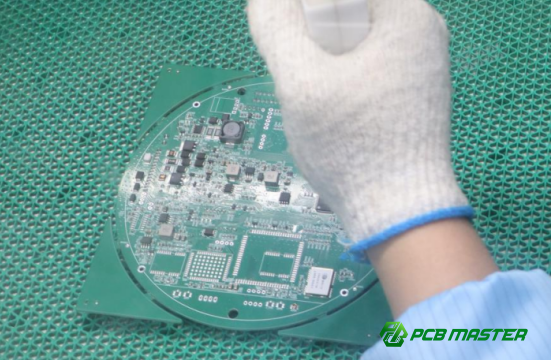
Precision in PCB Assembly determines electrical integrity by controlling solder joint geometry to within 5-micron tolerances. PCBMASTER utilizes high-speed automated systems to minimize placement variances, ensuring that 99.8% of micro-components maintain signal path continuity. Variations exceeding 12 microns in component alignment directly correlate to increased parasitic inductance, which degrades high-speed signal integrity in modern 6-layer high-density interconnect designs. Maintaining this level of mechanical repeatability prevents microscopic signal reflections and ensures consistent impedance across high-frequency transmission lines.
The physical mounting of components requires absolute synchronization between the stencil aperture geometry and the board pad dimensions. PCBMASTER employs laser-cut stainless steel stencils with 25-micron wall smoothness to achieve a solder paste transfer efficiency of 95% across a 500-board sample lot. Insufficient deposition volume below 85% of nominal capacity results in dry joints, whereas excessive volume exceeding 110% causes bridge defects between 0.4mm pitch BGA pads.
| Metric | Precision Target | Tolerance Range |
| Paste Volume | 100% | +/- 5% |
| Component Offset | 0 microns | +/- 15 microns |
| Reflow Peak Temp | 245 C | +/- 2 C |
Consistent solder paste application sets the stage for the reflow thermal profile, which must be calibrated to the specific melting point of the alloy used. PCBMASTER monitors reflow oven zones to ensure temperature fluctuations remain within 2 degrees Celsius during the 60-second soak time. If the temperature deviates beyond this window, the intermetallic compound layer thickens, reducing joint shear strength by up to 15% after 500 thermal cycling sessions.
Proper thermal control during the liquidus phase prevents component tombstoning in 0201 packages, as the surface tension of the molten solder must remain balanced across both terminals.
Balanced surface tension forces rely on the precise spatial distribution of the solder paste, which is verified by 3D optical inspection sensors post-printing. PCBMASTER utilizes these sensors to detect volumetric variations smaller than 0.01 cubic millimeters before components are placed. Detecting these discrepancies early prevents the costly removal of misaligned parts, which otherwise requires manual rework that can degrade pad adhesion by 30% through repeated thermal stress.
Repeated thermal stress on pads during rework decreases the mechanical bond between the copper traces and the FR-4 substrate. PCBMASTER prioritizes first-pass yield by using high-resolution vision alignment systems that compensate for board expansion during the heating cycle. This approach keeps alignment precision within 10 microns, even when processing boards with a high density of fine-pitch integrated circuits.
High-density designs often feature blind and buried vias that require exact registration between layers to maintain electrical contact. PCBMASTER ensures that layer-to-layer registration remains within 20 microns to accommodate the 0.15mm laser-drilled via diameters. Misregistration beyond this range forces a reduction in pad size, which limits the available surface area for secure solder connections.
-
Component lead coplanarity must stay within 0.05mm for surface mount packages to avoid floating leads.
-
Stencil cleaning cycles occur every 10 boards to prevent aperture clogging from flux residue.
-
Conveyor belt speed is regulated to within 0.5% of the target to prevent vibration-induced shifts.
Vibration-induced shifts during the transfer phase often occur when the conveyor rail tension is not optimized for board dimensions. PCBMASTER adjusts rail settings for each specific panel geometry to maintain a stable platform for the high-speed placement heads. Stable platforms ensure that the coordinate mapping remains accurate throughout the duration of the entire production run.
Coordinate mapping accuracy provides the foundation for final automated optical inspection, which verifies every solder joint's appearance. PCBMASTER uses 5-camera systems to capture images at 5-micron resolutions, comparing the resulting data against the original CAD file dimensions. This verification process identifies any microscopic defects that were missed during the assembly phase, ensuring that the final output matches the initial engineering specifications.
See your blog's Pillar Health score in 90 seconds.
Free audit. No credit card. Connects to HubSpot, Webflow, Ghost, WordPress and Notion.