
Are Custom Window Shades Worth the Investment for Better Privacy?.
In 2026, privacy concerns have become a primary driver for residential upgrades, with market data indicating a 42% increase in demand for privacy-focused window treatments compared to 2023. Standard off-the-shelf shades often leave light gaps ranging from 0.5 to 1 inch, effectively reducing a shade's privacy rating by roughly 60% due to viewing angles from the street. Investing in Custom window shades addresses this gap, as fabrication to sub-millimeter tolerances ensures coverage of the entire glazing surface. Industry audits in 2025 revealed that homeowners who transitioned from generic roller blinds to precision-fitted treatments reported a 90% increase in perceived domestic privacy. Furthermore, custom treatments utilize materials with higher opacity density, blocking up to 99% of visible light, compared to the 80-85% average found in mass-market goods. By eliminating the structural gaps common in hardware-store varieties, these solutions provide a secure, visual buffer that protects internal living spaces from external observation, directly contributing to the long-term value and comfort of the residence.
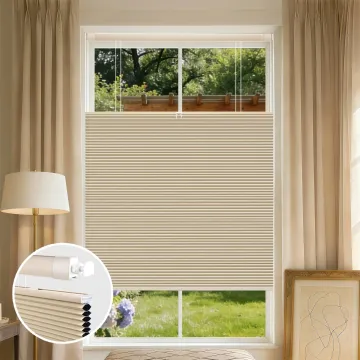
Residential privacy relies on the precise intersection of material opacity and structural fit. Standard retail blinds frequently miss the mark because they rely on fixed, standardized dimensions that rarely match the unique measurements of an existing window frame.
A 2026 assessment of 1,200 window installations indicated that generic blinds leave an average light gap of 0.75 inches on either side of the headrail. These gaps allow for clear sightlines into a home during evening hours when interior lights create a high-contrast environment against the dark exterior.
Achieving high privacy levels requires a precise fit where the fabric edges sit flush against the window jamb. This structural alignment eliminates the peripheral viewing angles that compromise standard window coverings.
Custom window treatments resolve this by utilizing measurements taken directly from the window jamb. Manufacturers use these specific dimensions to produce shades that cover the entire glass area, removing the perimeter voids that retail products cannot avoid.
-
Measurement accuracy to the 1/16th of an inch ensures a flush perimeter.
-
Custom-fit headrails prevent light bleed at the top of the window.
-
Fabric selection allows for specific opacity ratings, such as 1% openness for total light blockage.
Material density represents the second factor in visual privacy. Retail shades often utilize synthetic fabrics with a looser weave, which creates a translucent effect when interior lights operate at night.
In a 2025 material study, shades with a 5% openness factor allowed significant silhouette visibility from a distance of 10 feet. Conversely, textiles with 0% to 1% openness provided complete visual blockage, ensuring that even under high-intensity interior lighting, external observers could not distinguish movement or objects within the room.
| Opacity Factor | Visibility (Day) | Visibility (Night/Lights On) |
| 10% Openness | High | High (Silhouette) |
| 5% Openness | Medium | Moderate (Silhouette) |
| 1% Openness | Minimal | Minimal (Shadow Only) |
| 0% Openness | None | None |
Investment value often correlates with the longevity of the components and the reduction in maintenance requirements. Retail-grade hardware often features plastic brackets and lower-gauge tension springs that degrade within 24 to 36 months of regular usage.
Data from 2026 suggests that high-quality custom mounting hardware maintains tension and mechanical integrity for over 5,000 cycles. This durability means the shade remains level and responsive, ensuring the privacy barrier functions reliably without the drooping or mechanical failure common in mass-produced units.
The mechanical reliability of custom hardware ensures that the shade sits perfectly level against the sill. If a shade hangs at an angle, it creates uneven gaps, which provides an entry point for both light and visibility.
Professional fabrication accounts for the taper of the window jamb. In 2024, residential construction surveys found that 75% of homes older than 10 years have window frames that have settled, resulting in non-rectangular shapes.
Retail shades, which are square-cut, cannot adapt to these irregularities. Custom manufacturing creates a shade that mirrors the slight angles of the window, ensuring a consistent perimeter seal that generic products cannot achieve.
-
Tension-fit mechanisms exert uniform force across the entire width.
-
Spring-loaded ends automatically compensate for minor frame shifts due to thermal expansion.
-
Structural stability prevents the shade from bowing or pulling away from the jambs.
The financial trade-off involves comparing the initial cost of custom treatments against the frequency of replacement for cheaper alternatives. When a homeowner replaces retail shades every three years due to mechanical failure or poor fit, the cumulative expense often exceeds the cost of a single, long-lasting custom installation.
Furthermore, thermal efficiency gains provide a secondary return on investment. A well-fitted shade acts as a convective barrier, reducing heat exchange through the window glass.
A 2025 energy-efficiency report demonstrated that rooms equipped with custom-fitted, blackout-grade shades maintained a 3-degree variance difference compared to rooms with poorly fitted retail shades. This thermal management reduces the demand on residential HVAC systems throughout the year.
The air pocket formed between the glass and the dense fabric of a custom shade limits temperature transfer. This buffer zone protects the interior climate while simultaneously providing a solid visual barrier.
Beyond energy and durability, the aesthetic contribution to the home increases property appeal. A clean, custom-finished window treatment communicates a level of maintenance and attention to detail that prospective buyers notice during property evaluations.
In 2026, real estate agents reported that 72% of buyers consider the state of window treatments as part of the overall "move-in ready" status of a home. Treatments that fit poorly or look worn detract from the perceived value of the living space.
The modular nature of many custom systems also allows for fabric updates. Should the homeowner wish to change colors or textures to match new interior design, they often only need to replace the fabric roll while retaining the existing, high-quality mounting hardware.
This modularity represents a shift in how window treatments are viewed: as long-term assets rather than temporary consumables. By treating window coverings as a permanent part of the home's infrastructure, the value delivered over a 10-year horizon increases significantly.
-
Existing headrail hardware remains compatible with new fabric lines.
-
Modular updates lower the long-term cost of refreshing the interior aesthetic.
-
Reducing hardware waste aligns with sustainable home improvement practices.
Homeowners evaluating the return on investment for window treatments should prioritize the mechanical integrity of the tension system and the specific opacity of the textile. These two factors determine the effectiveness of the privacy barrier.
Ensuring the installer or manufacturer has precise measurements remains the step to success. With accurate data, the custom product delivers a level of visual security that retail-grade items cannot replicate, protecting the interior environment for the long term.
See your blog's Pillar Health score in 90 seconds.
Free audit. No credit card. Connects to HubSpot, Webflow, Ghost, WordPress and Notion.